
Coenzyme Q10 (CoQ10) is a nutrient the body makes and uses throughout its cells. It plays a central role in mitochondrial energy production, helping transfer electrons through the process that produces ATP, the energy currency that powers cellular activity. CoQ10 also functions as an antioxidant, helping protect cell membranes and other cellular components from oxidative damage.
In This Article
We have explored these roles in greater depth in our articles on Optimizing Cellular Energy and Mitochondrial Health. Those articles explain how CoQ10 participates in energy production, why mitochondria are so important to healthy aging, and why tissues with high energy demands have a particular need for reliable mitochondrial function.
As we age, CoQ10 production declines, making supplementation increasingly relevant. Choosing a supplement requires attention to the formulation, as CoQ10 is fat-soluble and has very low water solubility. Studies have demonstrated substantial differences in bioavailability among CoQ10 formulations, even when products contain the same labeled dose.
CoQ10 Has an Absorption Challenge
CoQ10 plays important roles in mitochondrial energy production and cellular antioxidant protection. These functions make CoQ10 particularly relevant to tissues with substantial energy demands.
Getting CoQ10 from a supplement into the body can be challenging. Its fat-soluble nature and very low water solubility affect how it behaves in the digestive tract and can limit the amount available for absorption and use by the body (bioavailability).
Human studies demonstrate that formulation can make a substantial difference. In one double-blind crossover study, researchers compared seven CoQ10 supplements, each providing 100 mg, in 14 healthy adults. Bioavailability differed significantly among the formulations. The two best-absorbed products used different molecular forms—one ubiquinone and one ubiquinol—highlighting the importance of the complete formulation, including the materials used to prepare and deliver CoQ10.
A separate study in 21 healthy adults ages 65 to 74 also found significant differences among three 100 mg CoQ10 formulations. The researchers observed that CoQ10 appeared in the blood predominantly as ubiquinol regardless of whether participants consumed ubiquinone or ubiquinol.
Why Micellized CoQ10?
Micellization is a formulation technique that helps prepare fat-soluble compounds for interaction with the watery environment of the digestive tract. Micelles are tiny structures that surround fat-soluble molecules, allowing them to remain dispersed in watery intestinal contents and come into contact with the surface of intestinal cells. For CoQ10, this creates a pathway that can make the nutrient more available for absorption.
PERQUE uses micellization to help make CoQ10 more available for absorption.* In a laboratory study that simulated digestion, researchers compared several CoQ10 formulations and measured how much CoQ10 became incorporated into mixed micelles during the intestinal phase of digestion. Greater micellization was associated with greater CoQ10 uptake by intestinal cells in this model. Most of the CoQ10 taken up by the cells was converted to ubiquinol during or after uptake.
Why Ubiquinone?
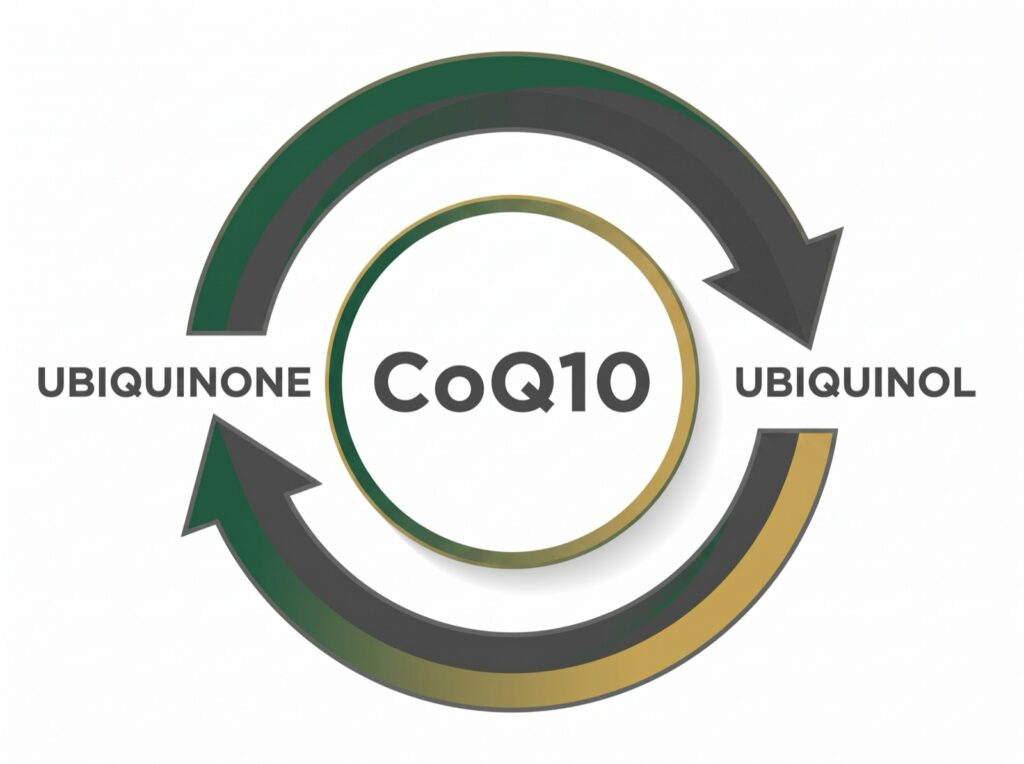 CoQ10 exists in two interconvertible forms: ubiquinone, the oxidized form, and ubiquinol, the reduced form. After absorption, the body can convert ubiquinone to ubiquinol.
In one study, supplementation with ubiquinone-10 at 100 mg three times daily increased circulating CoQ10 substantially. By day 11, approximately 80% of the circulating CoQ10 was present as ubiquinol, demonstrating that supplemental ubiquinone contributes to the reduced form found in circulation.
Other research has found that approximately 95% of circulating CoQ10 is present as ubiquinol, with this ratio remaining largely unchanged following oral CoQ10 supplementation. Solubilized formulations of both ubiquinone and ubiquinol produced enhanced plasma CoQ10 responses.
Ubiquinone and ubiquinol also differ in their chemical stability. As the reduced form and an electron donor, ubiquinol is susceptible to oxidation. Laboratory research examining commercial ubiquinol supplements found substantial conversion of ubiquinol to ubiquinone under simulated gastrointestinal conditions. Ubiquinol remained relatively stable inside intact gelatin capsules, while greater oxidation occurred when the capsules were exposed to simulated stomach and intestinal conditions.
Clinical research also provides important context for the use of ubiquinone. A 2023 review comparing clinical research on ubiquinone and ubiquinol identified cardiovascular benefits and reductions in cardiovascular mortality in clinical trials using ubiquinone in patients with heart failure. The authors did not identify comparable cardiovascular mortality findings for ubiquinol and concluded that the available clinical literature supported ubiquinone for cardiovascular applications in the heart failure populations they examined.
The PERQUE Difference Starts With Formulation
The choice of micellized ubiquinone reflects the physical and biological characteristics of CoQ10. Micellization helps prepare this fat-soluble nutrient for absorption, while the body can convert ubiquinone to ubiquinol after absorption.
The amount of CoQ10 listed on a supplement label tells only part of the story. The molecular form, delivery system, and overall formulation all influence how the CoQ10 behaves in the body.
PERQUE Mito Guard™ 100 Plus
PERQUE Mito Guard™ 100 Plus brings these considerations together with micellized ubiquinone CoQ10, complemented by mixed tocopherols and gamma oryzanol as lipid-soluble antioxidant compounds.*
*These statements have not been evaluated by the Food and Drug Administration. This product is not intended to diagnose, treat, cure, or prevent any disease.

Author: PERQUE Integrative Health (PIH) Clinical Team
Every resource on the PERQUE blog is crafted by the PIH Clinical Team, a multidisciplinary panel of functional medicine, pharmacy and nutrition experts led by immunologist Dr. Russell Jaffe, MD, PhD. Discover actionable strategies designed to optimize your physiology and restore lasting wellness.