
Some days, the smallest frustration can leave you irritable. Other days, you can handle the same situation without missing a beat. Many factors can contribute to this variability, including how well you slept the night before, the stresses of everyday life, and your body’s internal chemistry.
In This Article
Behind the scenes, your brain is constantly carrying out chemical reactions that help regulate mood. One of these processes is methylation, the transfer of a small methyl group from one molecule to another. This seemingly minor change can affect how a molecule functions. Methylation helps the brain break down neurotransmitters such as dopamine and norepinephrine, regulating the activity of these chemical messengers that influence mood and responses to stress. Methylation also helps convert serotonin into melatonin, the hormone that regulates your sleep-wake cycle.
Where Do Methyl Groups Come From?
The methyl groups used in these reactions have to come from somewhere. One important source is methionine, an essential amino acid found in protein-rich foods. Your body uses methionine to make a compound called SAMe, which delivers methyl groups wherever they’re needed.
What makes this process particularly interesting is that the body can recycle some of the materials involved. After SAMe donates a methyl group, it eventually becomes homocysteine. There are two main pathways for converting homocysteine back into methionine. One pathway relies on folate and vitamin B12. Another uses betaine, a compound the body makes from choline, an essential nutrient found in foods such as eggs and fish. Betaine supplies the methyl group needed to convert homocysteine back into methionine, allowing the cycle to continue. See Figure 1.
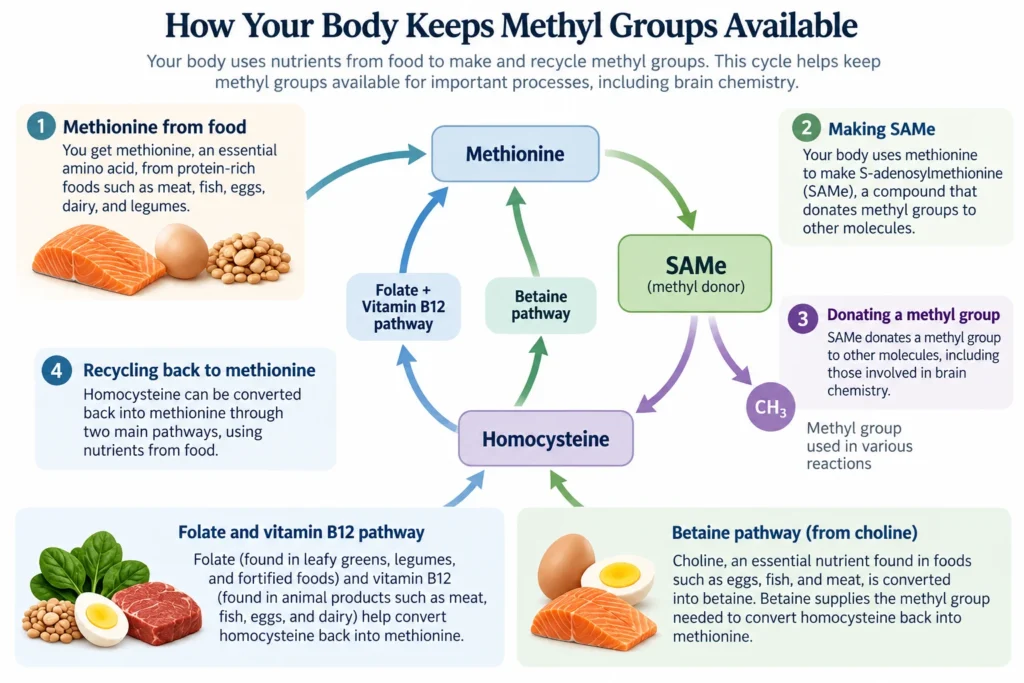
Figure 1. The methylation cycle uses methionine to produce SAMe, a major methyl-group donor. Folate, vitamin B12, and choline-derived betaine help support the recycling of homocysteine back into methionine.
Why Methylation Matters for Mood
Your brain relies on chemical messengers to communicate between nerve cells. The amount of time these messengers remain active, and how efficiently the brain processes them, can influence how you respond to everyday experiences.
Dopamine, for example, helps influence motivation and the sense of reward we experience when something goes well. Norepinephrine helps us stay alert and respond to challenges.
The COMT enzyme utilizes SAMe as a primary “methyl donor” cofactor to support the timely metabolic clearance of estrogens and neurotransmitters like dopamine and epinephrine. After dopamine and norepinephrine have delivered their messages, their activity needs to be regulated.
Individuals with specific genetic variations that reduce COMT activity (e.g., COMT Val158Met) may show heightened sensitivity to rapid changes in methyl group availability. For some, standard methylated vitamins are thought to overwhelm these slower pathways, which may correlate with temporary symptoms like anxiety, irritability, or sleep disruptions. To manage this potential sensitivity, alternative approaches often suggest utilizing non-methylated vitamin forms, like those used in the PERQUE line, alongside nutrients like choline to support the methylation cycle at a more gradual pace.
How Methylation Connects Mood and Sleep
Serotonin, a neurotransmitter involved in mood regulation, also serves as the starting material for melatonin, the hormone that helps control your sleep-wake cycle. This conversion involves two chemical changes. In the final step, an enzyme uses a methyl group donated by SAMe to produce melatonin. The body makes serotonin from tryptophan, an essential amino acid obtained through food. This means the production of melatonin depends in part on having enough tryptophan available to make serotonin, along with the methylation machinery needed to complete the conversion.
When Methylation Doesn’t Work as It Should
The body’s ability to carry out methylation depends in part on having enough of the nutrients that support it. When folate or vitamin B12 is deficient, the body may have difficulty converting homocysteine back into methionine. As a result, homocysteine can accumulate in the blood.
Why does this matter for mood? Researchers have found that people with depression sometimes have elevated homocysteine levels and lower folate levels. Some studies have also linked low folate status with changes in neurotransmitter metabolism.
Vitamin B12 deficiency provides another example. Because B12 is needed for normal nervous system function, a deficiency can contribute to irritability and changes in mood. It may also affect memory and concentration.
Supporting Methylation Through Nutrition
The nutrients needed for methylation come from a variety of foods. Methionine is found in protein-rich foods such as fish and eggs, while egg yolks are particularly rich in choline. Leafy green vegetables provide folate, and vitamin B12 is found naturally in animal-derived foods.
Getting enough of these nutrients can become more challenging with age. For example, some older adults produce less stomach acid, making it harder to release vitamin B12 from food during digestion. Even when their diets contain adequate B12, they may absorb less of it as a result.
Targeted Nutritional Support
Even with a nutrient-dense diet, some people may benefit from additional nutritional support. PERQUE Mood Guard™ provides L-methionine, the amino acid the body uses to make SAMe. It also contains glycine, which helps the body manage methyl-group availability. An enzyme called glycine N-methyltransferase uses SAMe to transfer a methyl group to glycine, helping regulate the amount of SAMe available for methylation reactions. Magnesium is also included because it is required by the enzyme that converts methionine into SAMe.*
PERQUE Choline Citrate™ supplies choline, which the body can convert into betaine to help recycle homocysteine back into methionine.* PERQUE Sleep Guard™ provides L-tryptophan, the amino acid used to produce serotonin, which can then be converted into melatonin through a process that includes methylation.*
Supporting Mood from Within
Mood naturally changes in response to the experiences and challenges of daily life. Giving your body the nutrients it needs to carry out methylation is one way to support the brain chemistry involved in those changes.
There are also lifestyle changes you can make to help support emotional well-being. Start by making time for movement you enjoy, whether that’s a daily walk, gardening, dancing, or spending time outdoors. Physical activity can help relieve tension and improve mood, while exposure to natural daylight helps reinforce the body’s sleep-wake rhythm. Establishing consistent sleep habits is another worthwhile step, especially since a poor night’s sleep can make everyday frustrations harder to manage.
Finding ways to unwind matters, too. Taking a few minutes for deep breathing, spending time with friends, or simply stepping away from a stressful situation can give your nervous system a chance to settle.
For more ideas, explore our article on Mood and Stress: The Neurochemistry Behind Emotional Resilience.
Together, adequate nutrition and thoughtful daily habits can help support the emotional resilience you rely on to navigate life’s ups and downs.
*These statements have not been evaluated by the Food and Drug Administration. This product is not intended to diagnose, treat, cure, or prevent any disease.

Author: PERQUE Integrative Health (PIH) Clinical Team
Every resource on the PERQUE blog is crafted by the PIH Clinical Team, a multidisciplinary panel of functional medicine, pharmacy and nutrition experts led by immunologist Dr. Russell Jaffe, MD, PhD. Discover actionable strategies designed to optimize your physiology and restore lasting wellness.