

GLP-1 medications have changed the way type 2 diabetes and obesity are managed. Drugs such as semaglutide (Ozempic and Wegovy) and tirzepatide (Mounjaro and Zepbound) can improve blood sugar control and produce substantial weight loss. For many people, one of the most noticeable changes is a significant reduction in appetite. Meals become smaller, feelings of fullness last longer, and the urge to eat may diminish considerably.
In This Article
These changes can help people achieve important metabolic health goals, but they also raise nutritional considerations. When someone consistently eats less, they may consume less protein, fewer essential vitamins and minerals, and a narrower variety of foods. Over time, inadequate intake can affect muscle maintenance, energy metabolism, and other functions that depend on a steady supply of nutrients. Understanding these potential challenges is an important part of supporting health throughout GLP-1 treatment.
How GLP-1 Medications Change Appetite and Digestion
Glucagon-like peptide-1 (GLP-1) is a hormone released by specialized cells in the intestine after eating. It helps regulate blood sugar by stimulating insulin secretion when glucose levels rise and reducing the release of glucagon, a hormone that signals the liver to release stored glucose. GLP-1 also acts on pathways involved in appetite and fullness, helping the body coordinate food intake with its metabolic needs.
Medications such as semaglutide and liraglutide activate GLP-1 receptors, producing effects that last considerably longer than those of the body’s naturally occurring hormone. Tirzepatide acts on receptors for both GLP-1 and glucose-dependent insulinotropic polypeptide (GIP), another hormone involved in metabolic regulation.
These medications can also slow gastric emptying, particularly during the earlier stages of treatment, so food remains in the stomach longer. Combined with their effects on appetite signaling, this can lead to earlier fullness, smaller portions, and reduced overall food consumption.
For someone who previously struggled with persistent hunger or elevated blood glucose, these effects can be beneficial. However, the reduction in food intake may also make it more difficult to consume enough of the nutrients needed for everyday physiological functions. This becomes especially important when treatment continues for months or years.
When Eating Less Means Getting Fewer Nutrients
Eating smaller portions can make it challenging to obtain enough essential nutrients, particularly when nausea, early fullness, or changes in food preferences limit dietary variety. Even when meals contain nutritious foods, consistently consuming less can leave gaps in the nutrients the body needs for everyday functions.
Protein is a particular concern during weight loss because the body needs amino acids to maintain muscle tissue, produce enzymes, and repair cells. When protein intake falls short, the body may break down existing muscle proteins to help meet its amino acid requirements. This becomes especially important during rapid weight loss, when preserving muscle mass is already a challenge.
Some nutritional shortfalls can develop gradually, making them harder to recognize. Reduced intake of foods rich in iron, vitamin B12, and folate, for example, may eventually affect the body’s ability to produce healthy red blood cells, contributing to fatigue and weakness. Inadequate intake of other essential nutrients can interfere with processes ranging from energy production and muscle function to tissue repair and immune health.
The extent of these nutritional changes varies depending on food choices, overall intake, and individual health status. Recognizing potential shortfalls early can help prevent inadequate nutrition from undermining the health improvements people hope to achieve through treatment.
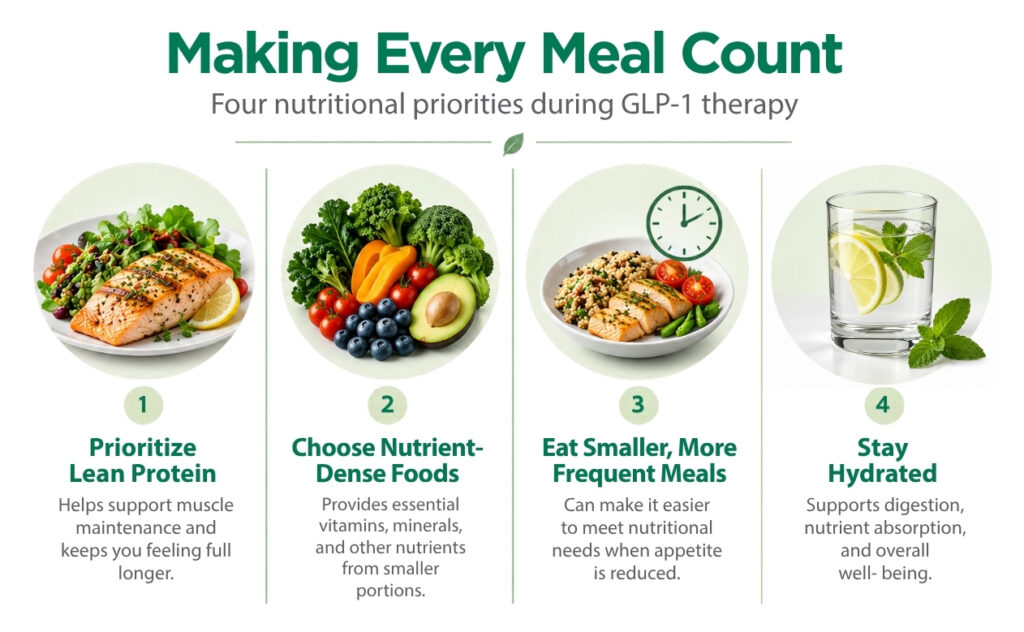
Making Every Meal Count
When appetite is significantly reduced, the nutritional value of each meal becomes increasingly important. Thoughtful food choices and a few adjustments to eating habits can help people meet their nutritional needs despite consuming smaller portions.
- Prioritize lean protein. Weight loss often includes some reduction in muscle mass, making adequate protein intake especially important. Skeletal muscle helps the body use glucose efficiently and provides the strength needed for everyday activities. Including protein-rich foods throughout the day, along with resistance exercises such as weight training or chair stands, can help preserve muscle strength and function.
- Choose nutrient-dense foods. Smaller meals need to deliver sufficient vitamins, minerals, essential fats, and other nutrients. Building meals around foods that provide several important nutrients at once can help make limited food intake more nutritionally complete.
- Adjust meal size and timing. Eating smaller meals at regular intervals may be easier to manage when fullness lasts longer than usual. Spreading food intake throughout the day can also create more opportunities to obtain adequate protein and other essential nutrients.
- Maintain adequate hydration. Reduced food intake may also mean consuming less fluid from foods and beverages. Drinking water regularly throughout the day is particularly important when nausea or constipation makes eating and drinking uncomfortable.
Filling Nutritional Gaps During GLP-1 Therapy
Even with careful meal planning, meeting nutritional needs can be challenging when appetite remains low for extended periods. Targeted supplementation may help address gaps in dietary intake. The goal is to provide the nutritional building blocks the body needs to maintain normal physiological function throughout treatment.
A broad nutritional foundation is a useful starting point. PERQUE Life Guard Mini™ provides vitamins, minerals, and other essential cofactors involved in cellular energy production, tissue maintenance, and metabolic processes.* For someone eating substantially less than usual, comprehensive nutritional support can help complement a nutrient-dense diet and reduce the likelihood that limited food intake leaves important needs unmet.
Digestive health also deserves attention, especially when changes in appetite are accompanied by gastrointestinal discomfort. PERQUE Digesta Guard Forté 10™ offers targeted digestive support, while PERQUE Endura/PAK Guard™ supplies L-glutamine and pyridoxal alpha-ketoglutarate (PAK).* Glutamine serves as a fuel source for intestinal cells and participates in amino acid metabolism, making it relevant to maintaining normal intestinal function. These approaches can complement dietary strategies when digestive difficulties complicate nutritional intake.
Magnesium intake may also warrant attention when food consumption decreases. This mineral participates in hundreds of enzyme reactions, including those involved in energy production, muscle contraction, and nerve signaling. PERQUE Mg Plus Guard™, paired with PERQUE Choline Citrate™, provides a targeted option for supporting magnesium status when additional intake is appropriate.*
Other nutritional needs may emerge depending on dietary patterns, symptoms, and laboratory findings. Rather than adding supplements indiscriminately, healthcare professionals can evaluate whether specific nutrients require additional attention and select appropriate support. This is especially important for individuals taking glucose-lowering medications, since some supplements may influence blood sugar management.
For a broader discussion of PERQUE® products that support the body’s own metabolic signaling pathways, see Optimize Your Body’s Natural GLP-1 Signaling. That article explores the relationship between digestive signaling, glucose regulation, and the body’s natural GLP-1 response.
Looking Beyond Weight Loss
GLP-1 medications can help people achieve meaningful improvements in weight management and blood sugar control. As treatment continues, maintaining adequate nutrition becomes an important part of sustaining those gains. Paying attention to food intake, muscle strength, and changes in nutritional status can help identify needs that might otherwise go unnoticed.
A thoughtful approach combines nutrient-dense meals, regular physical activity, and individualized nutritional support. Working with a qualified healthcare professional to assess dietary intake and address potential deficiencies can help ensure that weight loss is accompanied by the nourishment needed to support long-term health and physical function.
*These statements have not been evaluated by the Food and Drug Administration. These products are not intended to diagnose, treat, cure, or prevent any disease.

Author: PERQUE Integrative Health (PIH) Clinical Team
Every resource on the PERQUE blog is crafted by the PIH Clinical Team, a multidisciplinary panel of functional medicine, pharmacy and nutrition experts led by immunologist Dr. Russell Jaffe, MD, PhD. Discover actionable strategies designed to optimize your physiology and restore lasting wellness.