
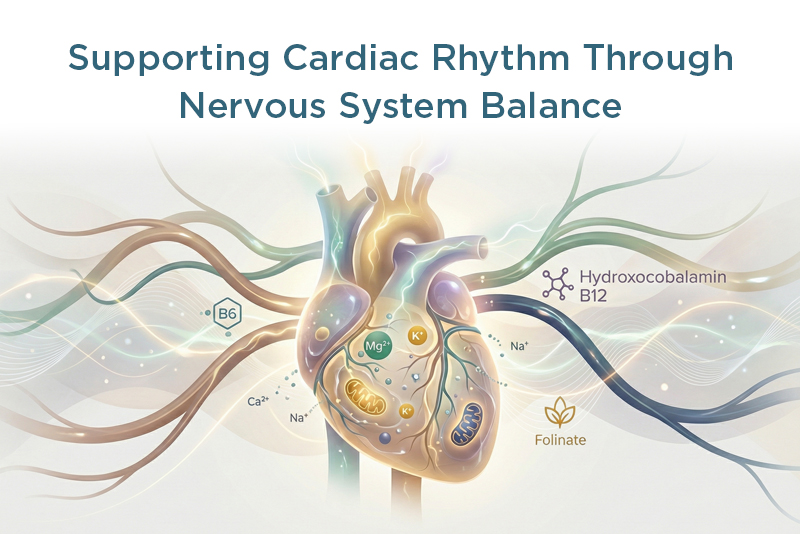
The human heart coordinates every beat through a blend of electrical signals, nervous system guidance, mineral balance, and cellular energy. Rhythm emerges from ongoing communication among the nervous system, mitochondria, circulating electrolytes, and the vascular system, producing a seamless pattern of contraction and recovery that supports both immediate responsiveness and long-term cardiovascular resilience.
Every heartbeat feels effortless because countless tiny processes work together. When these systems are supported, the heart adapts smoothly to your daily life — whether you’re walking, laughing, or tackling a busy afternoon.
The Electrical Foundation of Cardiac Rhythm
With each beat, your heart sends a spark of electricity through specialized cells, triggering the chambers to contract in a precise rhythm that powers every thought, movement, and breath — like a symphony playing thousands of perfectly timed notes each day. Minerals such as magnesium guide these electrical signals, keeping every impulse steady and reliable. Together with stable nervous system signaling and consistent cellular energy, they create a rhythm that flexes naturally, responding to movement, breathing, and emotional shifts.
Autonomic Regulation and Heart Rate Adaptability
The heart has its own rhythm, yet it responds continuously to signals from the nervous system. The autonomic nervous system adjusts heart rate and rhythm moment to moment. The sympathetic system speeds the heart when activity or stress rises, while the parasympathetic system slows it during rest and recovery.
Autonomic regulation depends on nutrients and cellular energy. Minerals and B vitamins help nerve signals flow smoothly, allowing each beat to respond naturally to movement, breathing, and emotions. Supporting this dynamic network keeps the heart’s rhythm adaptable, steady, and aligned with the natural demands of daily life.
Mitochondria and the Energy Behind Every Beat
The heart contains one of the highest concentrations of mitochondria in the body. Continuous contraction relies on uninterrupted ATP production, which powers ion pumps and supports membrane stability. Every beat depends on this energy to reset electrical signals and drive muscle contraction. Coenzyme Q10 (CoQ10) plays a key role inside mitochondria, helping generate ATP and maintaining the membranes where energy is produced. Adequate CoQ10 ensures each electrical signal fires reliably and each contraction occurs smoothly, maintaining a stable, adaptable rhythm.
Vascular Tone and Circulatory Support
The heart doesn’t work in isolation. Each beat interacts with the vessels that carry blood throughout your body. Healthy vascular tone — the natural ability of blood vessels to dilate and constrict — influences how easily blood flows and how efficiently the heart can pump.
Endothelial cells lining the vessels communicate constantly, releasing signals like nitric oxide that guide dilation and help manage resistance. Proper communication in this system supports steady blood pressure and ensures that oxygen and nutrients reach tissues efficiently.
Active forms of vitamin B6, hydroxocobalamin (B12), and folinate help regulate homocysteine levels and support methylation, contributing to smooth endothelial communication. Minerals and antioxidants further maintain the structural integrity of vessel walls, allowing the circulatory system to work in concert with the heart’s rhythm, helping blood flow meet changing tissue needs throughout the body. When the vessels and the heart operate together, each beat moves blood with consistent strength and timing, creating the seamless rhythm that underlies overall cardiovascular stability.
Mineral Gradients and Membrane Stability
Magnesium, potassium, calcium, and sodium create the electrical gradients that allow heart cells to fire reliably. Magnesium supports ATP stability and helps regulate ion channels. Potassium guides the reset phase of electrical impulses, and calcium controls contraction strength and timing.
Hydration influences how these minerals are distributed. Drinking mineral-rich water — from glass bottles or a trusted well source — supports fluid balance and helps maintain stable gradients. When mineral levels and hydration are consistent, electrical signals propagate efficiently, forming the foundation for a heart that beats with rhythm and resilience.
Integrating Nervous System and Cellular Support
Heart rhythm emerges from the combined activity of multiple systems:
- Autonomic nervous system signaling
- Mitochondrial ATP production
- Membrane ion channel integrity
- Vascular endothelial communication
- Methylation-dependent metabolic pathways
When these systems function together, the heart responds smoothly to activity, breathing, and emotional shifts. Minerals, CoQ10, and bioactive B vitamins each contribute to this integration by supporting energy production, ion channel stability, and vascular communication.
Supporting Heart Rhythm: Practical and Nutrient Strategies
You can support the systems that maintain steady, adaptable heart rhythm through daily practices and targeted nutrients. Consistent hydration with mineral-rich water helps sustain electrolyte balance and supports the gradients that guide electrical signals. Adequate intake of magnesium, potassium, and calcium maintains membrane stability, while CoQ10 fuels mitochondrial energy to power every contraction and reset. Bioactive B vitamins — B6, hydroxocobalamin (B12), and folinate — reinforce methylation pathways and vascular signaling, keeping communication between the heart and blood vessels smooth and responsive.
Lifestyle choices further strengthen these systems. Prioritizing restorative sleep, managing daily stress, and engaging in moderate, regular activity — including gentle movement, stretching, or walking — enhance parasympathetic tone and cardiovascular adaptability. Eating a nutrient-dense diet ensures the heart has the raw materials it needs to maintain rhythm naturally throughout the day.
PERQUE provides these nutrients in forms optimized for absorption and cellular utilization, working together with lifestyle practices to help your heart maintain rhythm and responsiveness throughout the day:
- PERQUE Mg Plus Guard™ – Supplies magnesium in highly bioavailable forms to support membrane stability, electrolyte balance, and smooth electrical signaling for every heartbeat.
- PERQUE Mito Guard 100 Plus™ – Delivers micellized CoQ10 in the ubiquinone form, along with antioxidant cofactors to sustain mitochondrial energy, stabilize cell membranes, and support reliable, adaptable contractions.
- PERQUE Vessel Health Guard™ – Combines bioactive B6, hydroxocobalamin (B12), and folinate to maintain methylation pathways, regulate homocysteine, and reinforce communication between blood vessels and the heart.
By combining nutrient support with consistent daily practices, you create conditions for a heart that beats with reliable rhythm, adapts seamlessly to daily life, and builds long-term cardiovascular resilience.
A Systems-Based Perspective on Rhythm Stability
Heart rhythm reflects ongoing communication among energy production, neural input, vascular tone, and membrane integrity. Supporting these systems encourages consistency, adaptability, and long-term cardiovascular well-being. Small, daily actions — nutrient support, hydration, restorative sleep, stress management, and movement — work together to maintain steady rhythm and responsive performance throughout life.
Health is cumulative. Each day you support these systems, your heart strengthens its ability to respond, recover, and sustain a reliable rhythm for years to come.

Author: PIH Team
PERQUE nutraceuticals are distinctive from the inside out. Each product represents a rethinking for how nutrients interact with the body and the impact they can have on the body’s ability to overcome the obstacles to repair and then stimulate natural healing responses.