

Your skin has a story to tell about your metabolic health. Beneath its surface, millions of cells depend on a continuous supply of energy, oxygen, and nutrients to maintain the structures that keep skin strong, flexible, and capable of repair. Blood sugar regulation plays an important role in all of these processes, which is why blood sugar and skin health are so closely connected.
When glucose levels remain elevated over time, changes can occur in the proteins that give skin its strength, the blood vessels that nourish it, and the cellular processes responsible for renewal. Some of these changes may contribute to dryness, reduced elasticity, and slower healing.
In This Article
- When Sugar Changes the Structure of Your Skin
- Insulin Resistance and the Inflammatory Connection
- Why Circulation Matters for Skin Repair
- Nutrients That Support Skin and Metabolic Health
- Targeted Nutritional Support with PERQUE®
- Everyday Habits That Support Blood Sugar and Skin Health
- Healthy Skin Reflects Whole-Body Health
When Sugar Changes the Structure of Your Skin
Think of collagen as the framework that helps keep your skin firm and resilient. Its fibers provide strength and support, while elastin allows skin to stretch and return to its original shape. Over time, excess sugar in the bloodstream can change how these proteins behave.
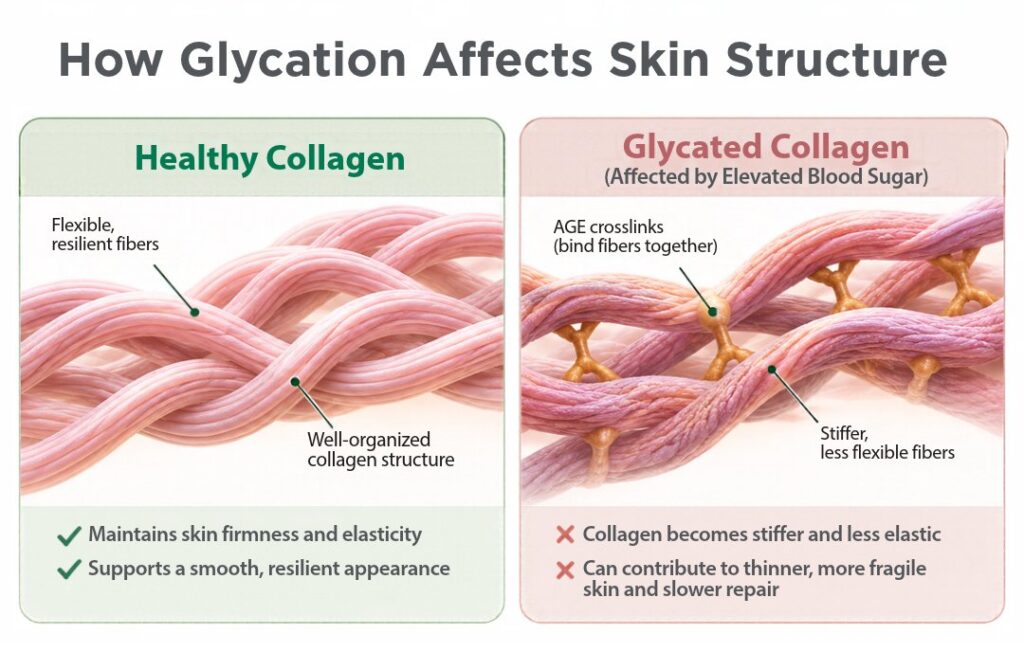 Through a process called glycation, sugars attach to proteins such as collagen and elastin. These reactions can eventually produce compounds known as advanced glycation end products (AGEs), which can create unwanted bonds between collagen fibers. As these bonds accumulate, the fibers become stiffer and less flexible, making it harder for skin to maintain its natural elasticity.
The effects develop gradually. Because collagen is a long-lived protein, glycation-related changes can build up over years, contributing to wrinkles, reduced firmness, and other visible signs of skin aging. Persistently elevated blood glucose can accelerate this process, while oxidative stress and inflammation can further contribute to damage.
Insulin Resistance and the Inflammatory Connection
Insulin helps move glucose from the bloodstream into cells, where it can be used for energy. Factors such as excess abdominal fat, chronic inflammation, and physical inactivity can interfere with how effectively cells respond to insulin, a condition known as insulin resistance. To compensate, the pancreas produces more insulin, which may keep blood glucose within a normal range for a time. As insulin resistance progresses, however, blood glucose levels may begin to rise.
One of the more recognizable signs of insulin resistance is acanthosis nigricans, a condition that causes patches of darkened, thickened, velvety skin, often around the neck, armpits, or other skin folds. Elevated insulin levels can stimulate excessive growth of skin cells, contributing to these changes. In some people, they may be an early indication that glucose regulation needs attention.
Insulin resistance is also associated with increased oxidative stress and chronic low-grade inflammation. These conditions can interfere with normal skin cell function and contribute to inflammatory skin problems. They may also affect the skin’s protective barrier, which helps retain moisture and defend against environmental irritants.
Research has identified connections between insulin resistance and several skin conditions, including acne, psoriasis, and acanthosis nigricans.
Why Circulation Matters for Skin Repair
Your skin is constantly repairing itself, whether it’s healing a small cut, replacing damaged cells, or recovering from everyday wear and tear. These processes depend on tiny blood vessels that deliver oxygen and nutrients to the tissues where they’re needed.
Persistently elevated blood glucose can damage these small blood vessels, reducing the efficiency of circulation. High glucose levels can also interfere with immune cell function and the production of new tissue, making it harder for the skin to recover from injury.
Consider what happens when you get a small cut. Immune cells arrive to protect the area, new blood vessels help supply the healing tissue, and collagen provides the framework for rebuilding damaged skin. When glucose regulation is impaired, these coordinated steps can be disrupted, delaying healing and increasing the risk of complications. Research shows that diabetes can interfere with multiple stages of wound healing.
Elevated blood glucose can also affect skin hydration. When glucose levels become sufficiently high, the kidneys remove excess glucose through urine, drawing additional water from the body. This increased fluid loss can contribute to dehydration and dry skin.
Nutrients That Support Skin and Metabolic Health
Healthy skin requires a dependable supply of nutrients for cellular energy production, collagen synthesis, antioxidant protection, and tissue renewal. Several of these nutrients also participate in glucose metabolism, creating an important connection between nutritional status and skin health.
Vitamin C is essential for collagen synthesis. It supports the enzymes responsible for stabilizing collagen’s structure and contributes to antioxidant defenses that protect cells from oxidative damage.
Zinc is involved in protein synthesis, cell division, immune function, and normal wound healing. It also participates in processes related to insulin production and function.
Magnesium serves as a cofactor in hundreds of enzymatic reactions, including those involved in glucose metabolism and cellular energy production. Adequate magnesium status helps support normal insulin signaling and metabolic function.
B vitamins contribute to the conversion of carbohydrates, fats, and proteins into usable energy. Several also support cellular growth and maintenance, processes that are particularly important in tissues undergoing continuous renewal.
Protein and essential amino acids provide the building blocks needed to produce collagen, enzymes, and other structural components involved in skin maintenance and repair.
Research examining nutrition and wound healing highlights the importance of adequate protein, vitamins, and minerals throughout the tissue repair process.
A varied, nutrient-dense diet provides the foundation for meeting these needs. When dietary intake is insufficient or individual requirements are increased, targeted nutritional support may help address specific gaps.
Targeted Nutritional Support with PERQUE®
When additional nutritional support is appropriate, the formulation matters. PERQUE products combine carefully selected nutrients and botanical ingredients to support the metabolic processes involved in maintaining healthy skin and normal glucose regulation.
PERQUE Glucose Regulation Guard Forté™ features a distinctive blend of botanicals selected for their roles in supporting healthy glucose metabolism.* French lilac (Galega officinalis) has a particularly interesting history: research into compounds derived from this plant helped lay the groundwork for the development of metformin. Bitter melon has a long history of traditional use for blood sugar support, while corosolic acid, associated with banaba leaf, has been studied for its potential effects on glucose metabolism. Bilberry, huckleberry, and chaste tree berry round out the botanical blend, complemented by chromium, vanadium, and other nutrients.*
PERQUE Life Guard Mini™ provides a comprehensive blend of vitamins, minerals, and other nutrients, including a full complement of B vitamins. These nutrients support the conversion of carbohydrates, fats, and proteins into cellular energy, while contributing to normal cell growth, maintenance, and renewal.* Its broad nutritional foundation makes it relevant to both metabolic health and the ongoing demands of skin maintenance.
PERQUE Potent C Guard™ powder and tabsules provide 100% fully reduced L-ascorbate, the biologically active form of vitamin C. This formulation supports the body’s ability to produce and maintain collagen while contributing to antioxidant protection against oxidative stress.* Both functions are particularly relevant to skin exposed to the cumulative effects of elevated glucose.
PERQUE Hair, Skin, & Nails Guard™ provides a targeted combination of nutrients that support the skin’s structural integrity and natural renewal processes.* Its formulation includes L-lysine, an essential amino acid needed for collagen formation, along with vitamin C, zinc, and copper, which contribute to collagen synthesis, connective tissue maintenance, and normal repair.* Biotin and additional nutrients support cellular metabolism and the ongoing renewal of skin, hair, and nails.*
Supplementation should be individualized, particularly for people taking glucose-lowering medications. Botanical ingredients that influence glucose metabolism may require additional consideration when used alongside these medications.
Everyday Habits That Support Blood Sugar and Skin Health
The choices we make every day influence how well our bodies manage blood sugar and maintain healthy skin. What we eat, how much we move, and how well we sleep all affect the processes involved in skin renewal and repair.
Start with what’s on your plate. Vegetables, fiber-rich foods, and adequate protein help provide the nutrients needed to maintain healthy skin while supporting more stable blood glucose levels. Pairing carbohydrates with protein and fiber can also help moderate the rise in blood sugar after meals.
Make movement part of your routine. When muscles contract during physical activity, they can take up glucose from the bloodstream more efficiently, even without requiring as much insulin. Regular movement also improves circulation, helping deliver oxygen and nutrients to skin tissues.
Give sleep the attention it deserves. Poor sleep can reduce insulin sensitivity and affect hormones involved in appetite and stress. Consistent, restorative sleep also supports the cellular maintenance and repair processes that help keep skin healthy.
Stay hydrated and manage stress. Adequate fluids help maintain normal skin hydration, while chronic stress can affect glucose regulation through hormones such as cortisol. Finding manageable ways to reduce stress, whether through walking, relaxation exercises, or time outdoors, can benefit both metabolic and skin health.
Daily sun protection and gentle skin care also help preserve the skin’s protective barrier and reduce avoidable damage.
Healthy Skin Reflects Whole-Body Health
Healthy skin depends on far more than what we apply to its surface. Its strength, elasticity, and ability to repair itself are influenced by how effectively the body manages glucose, delivers nutrients, and protects cells from damage.
Caring for your skin therefore includes caring for your metabolic health. By supporting healthy blood sugar regulation and meeting the body’s nutritional needs, we help provide the conditions that allow skin to remain resilient and function well throughout life, and that is the heart of the connection between blood sugar and skin health.
*These statements have not been evaluated by the Food and Drug Administration. These products are not intended to diagnose, treat, cure, or prevent any disease.

Author: PERQUE Integrative Health (PIH) Clinical Team
Every resource on the PERQUE blog is crafted by the PIH Clinical Team, a multidisciplinary panel of functional medicine, pharmacy and nutrition experts led by immunologist Dr. Russell Jaffe, MD, PhD. Discover actionable strategies designed to optimize your physiology and restore lasting wellness.