
More than 40 million Americans live with diabetes, and another 118 million adults have prediabetes. Diabetes is a condition in which the body has difficulty regulating blood sugar, either because insulin is not produced in sufficient amounts or because cells do not respond to it effectively.
Glucose circulates in the bloodstream as a primary source of energy. The body uses insulin to move that glucose into cells, where it can be used for fuel. When this process becomes less efficient, glucose remains elevated in the bloodstream instead of being used where it is needed.
Elevated glucose affects multiple systems. It changes how blood vessels function, placing strain on circulation over time. It influences nerve health, which can affect sensation and signaling. It also alters how cells manage energy, since fuel remains in the bloodstream rather than entering the cells that rely on it.
These effects extend into daily experience. Cells that do not receive steady fuel can contribute to uneven energy levels. The brain depends on a consistent supply of glucose, so fluctuations can affect focus and mental clarity. Hormonal signals tied to blood sugar also influence hunger, shaping when and how often a person feels the need to eat.
Optimizing sleep and gut function is fundamental to metabolic control, as both systems play a direct role in insulin sensitivity and glucose balance.
Blood Sugar Regulation Follows a Daily Sequence
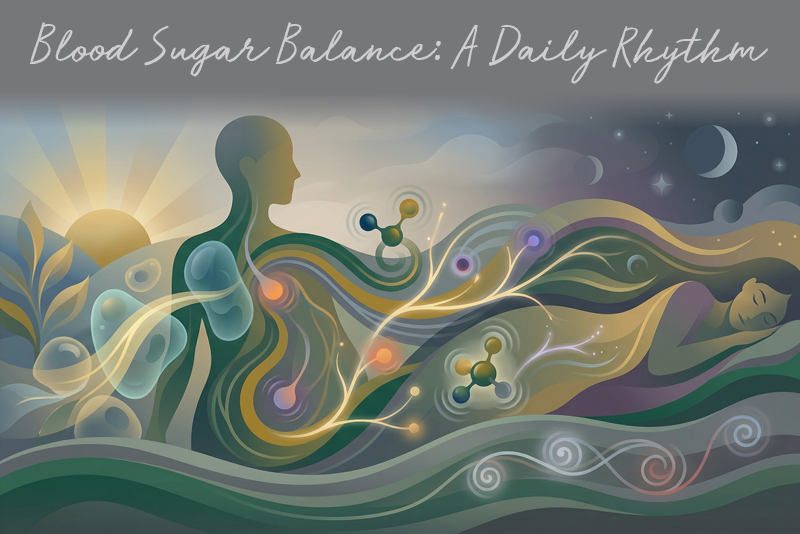
The body manages blood sugar through a continuous sequence of “preparation, utilization, and reset” that repeats each day. Each phase contributes to how effectively the body uses and stores energy.
During the preparation stage, signals from taste receptors and the digestive tract help coordinate how the body will handle incoming nutrients. Once glucose enters the bloodstream, the focus shifts to utilization. Glucose must move into cells to support physical activity, brain function, and cellular maintenance.
The final phase occurs during sleep. Insulin sensitivity follows a daily rhythm, helping cells respond appropriately to glucose the next day. Cortisol levels decrease during early sleep, allowing the body to rest and carry out restorative processes. As morning approaches, cortisol begins to rise, preparing the body for waking activity and energy use. The liver releases small, steady amounts of glucose overnight to keep blood sugar within a stable range while the body is not eating. These cortisol patterns are part of the body’s broader stress-response system (also known as the HPA Axis), and when sleep or blood sugar is disrupted, the demand on this system can increase over time.
This preparation, utilization, and reset sequence shapes how the body manages blood sugar from morning through night. Supporting each phase helps maintain steady energy, consistent focus, and balanced metabolic function. Conversely, small disruptions in preparation, utilization, or overnight reset can contribute to elevated blood sugar and energy fluctuations seen in diabetes and prediabetes.
Preparing the Body to Handle Glucose at Meals
Before glucose even enters the bloodstream, the body starts preparing to use it efficiently. Signals from taste receptors—particularly bitter receptors—trigger early communication with the digestive system and pancreas. These signals help prime insulin and other metabolic pathways so that when glucose arrives, the body is ready to handle it effectively.
This early-phase signaling affects how smoothly glucose moves from the bloodstream into cells. Strong coordination at this stage can reduce spikes in blood sugar and help maintain steady energy throughout the day.
PERQUE DigestivAide™ Herbal Bitters supports this preparation phase. By activating bitter receptors throughout the gastrointestinal tract, it enhances early signaling tied to glucose handling. Taking it before meals helps the body respond to incoming nutrients in a coordinated way, setting the stage for better energy use and metabolic balance.
Supporting this preparation phase helps later stages—glucose transport into cells and overnight metabolic reset—work more efficiently, contributing to steadier energy, focus, and appetite throughout the day.
Using Glucose Efficiently Inside the Body
After glucose enters the bloodstream, it needs to move into cells to be used as fuel. Insulin acts as a key signal, allowing cells—especially muscle and liver cells—to take in glucose. Efficient transport ensures that energy is available where it is needed, supporting physical activity, brain function, and cellular maintenance.
When this process is less efficient, glucose remains in the bloodstream, contributing to higher blood sugar levels and leaving cells without the fuel they require. Over time, inefficient glucose uptake can influence energy consistency, hunger patterns, and metabolic balance.
PERQUE Glucose Regulation Guard Forté™ supports this stage by promoting glucose transport activity, helping glucose move into cells effectively, thereby supporting steady energy and lean body mass. Taking it 15-30 minutes before meals complements the body’s natural signaling and prepares energy for daily activity.
Resetting Blood Sugar Control During Sleep
The final stage in daily blood sugar regulation occurs overnight. During restorative sleep, the body shifts into a state that supports metabolic balance and prepares cells to respond to glucose the next day. PERQUE Sleep Guard™ supports this stage by promoting serotonin production, helping maintain consistent sleep rhythms. Consistent sleep patterns reinforce insulin sensitivity and hormone balance, completing the daily glucose cycle.
A Multi-System Approach to Blood Sugar Balance
Blood sugar regulation depends on coordination across multiple systems throughout the day. Each stage—pre-meal signaling, post-meal glucose uptake, and overnight metabolic reset—relies on distinct processes working efficiently.
- At meals: PERQUE DigestivAide™ Herbal Bitters primes early signaling through bitter receptors, helping the body handle incoming glucose smoothly.
- After meals: PERQUE Glucose Regulation Guard Forté™ supports cellular glucose uptake, ensuring energy reaches muscle, liver, and other tissues.
- Overnight: PERQUE Sleep Guard™ reinforces restorative sleep rhythms, supporting insulin sensitivity and preparing cells for the next day’s glucose management.
By supporting each phase, these products work together to maintain steady energy, consistent focus, and overall metabolic balance, which is especially helpful for individuals with diabetes or prediabetes.
Supporting Blood Sugar Through Daily Habits
Consistent meal timing, regular movement, adequate hydration, stable sleep patterns, and stress management help maintain steady energy, focus, and overall metabolic balance throughout the day. These habits complement the effects of pre-meal signaling, cellular glucose uptake, and overnight metabolic reset.
Conclusion
Blood sugar regulation is a continuous, multi-system process, spanning from pre-meal signaling to overnight metabolic reset. Supporting each phase, along with healthy daily habits, helps maintain steady energy, focus, and metabolic balance throughout the day.
In the upcoming April articles, we will dive deeper into each phase—exploring the mechanisms behind early signaling, cellular glucose uptake, and sleep-related metabolic reset—so you can see how each contributes to overall blood sugar health.

Author: PIH Team
PERQUE nutraceuticals are distinctive from the inside out. Each product represents a rethinking for how nutrients interact with the body and the impact they can have on the body’s ability to overcome the obstacles to repair and then stimulate natural healing responses.